Honda A-Series Engine Specifications and Identification
The Honda A-series engines, found in various Accord and Prelude models, are 12-valve SOHC inline-four powerplants known for their reliability. This article details their identification, general specif
Adapted from Nthefastlane

The Honda A-series engines are a family of inline-four cylinder powerplants primarily used in the Honda Accord and Prelude models during the 1980s. These engines are recognized for their robust design and straightforward mechanics, often featuring a 12-valve SOHC (Single OverHead Camshaft) configuration.
Image placeholder - replace with a publication-cleared photo (d7f001_fe70f35b91034d36b92993f8e6636a3f~mv2.jpg).
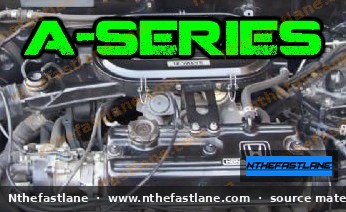
Engine Identification
Identifying a specific A-series engine is crucial for maintenance, parts ordering, and understanding its characteristics. The engine code provides key information about its displacement and specific variant.
Locating the Engine Code
The engine code is typically stamped directly onto the engine block. Common locations include:
- On a flat surface near the transmission bell housing, on the front side of the block.
- On the front of the block, below the cylinder head, often near the exhaust manifold.
Tip
Cleaning the area with a wire brush and degreaser may be necessary to clearly read the stamped code, especially on older engines.
Decoding A-Series Designations
Honda A-series engine codes generally follow a pattern where the first two digits indicate the approximate displacement:
- A16: Denotes an engine with approximately 1.6 liters of displacement.
- A18: Denotes an engine with approximately 1.8 liters of displacement.
- A20: Denotes an engine with approximately 2.0 liters of displacement.
Further alphanumeric characters (e.g., A1, A3) after the initial designation often specify regional variations, fuel system types (carbureted vs. PGM-FI), or minor internal differences.
General Specifications
The A-series engines share several fundamental design characteristics, making them distinct from later Honda engine families.
Engine Architecture
- Configuration: Inline 4-cylinder.
- Camshaft Layout: SOHC (Single OverHead Camshaft).
- Block Material: Cast iron, known for its durability.
- Cylinder Head Material: Aluminum alloy.
Valvetrain
- Valve Count: 12 valves total (three valves per cylinder: two intake, one exhaust). This 3-valve-per-cylinder design was common in Honda engines of this era.
- Valve Adjustment: Mechanical, typically utilizing a screw-and-locknut adjustment system. Regular valve lash inspection and adjustment are part of routine maintenance.
Fuel and Ignition Systems
- Fuel Delivery: Varies by market and specific model year. Early A-series engines often employed carbureted fuel systems, while later versions (particularly in North America) transitioned to PGM-FI (Programmed Fuel Injection).
- Ignition System: Distributor-based, utilizing a single ignition coil and distributor to send high voltage to the spark plugs.
Displacement Variants
While sharing a common architecture, the A-series came in several displacement sizes:
- A16: Approximately 1.6 liters.
- A18: Approximately 1.8 liters.
- A20: Approximately 2.0 liters.
These variations primarily involved changes in bore and stroke to achieve the desired displacement, often accompanied by different intake manifold designs and ECU programming.
Maintenance Considerations
Maintaining an A-series engine involves standard procedures common to most internal combustion engines, with a few specific points to note:
- Timing Belt: The A-series engines are interference engines, meaning valve-to-piston contact can occur if the timing belt breaks. Adhere strictly to the factory-recommended timing belt replacement interval.
- Valve Adjustment: Due to the mechanical valvetrain, periodic valve lash adjustment is necessary to maintain optimal engine performance and prevent excessive wear. Consult the factory service manual for specific clearance specifications.
- Fluid Capacities: Engine oil capacity, coolant capacity, and other fluid specifications should always be confirmed against the factory service manual for the specific model and year.
Caution
Always ensure the engine is cool before performing valve adjustments to obtain accurate clearances.
Important Notes
Important
For all specific technical data, such as torque specifications, precise fluid capacities, sensor resistance values, and detailed repair procedures, always consult the official Honda Factory Service Manual (FSM) relevant to your specific vehicle's model year and engine code. Information provided here is for general reference and identification purposes.
Applies to
2 taxonomy linksCredits and source
Source Adapted from Honda A-series Engine Specs Information on Nthefastlane. Licensed under All rights reserved.