Honda D-Series Engine Specifications and Identification
Explore the Honda D-series engine family, covering identification methods, common variants like D15, D16, and D17, and general specifications for popular Civic, CRX, and Del Sol models.
Adapted from Nthefastlane

The Honda D-series engine family is a widely recognized and utilized line of inline four-cylinder engines, primarily found in various Honda Civic, CRX, and Del Sol models from the late 1980s through the early 2000s. Known for their compact design, fuel efficiency, and adaptability, D-series engines have powered a broad range of vehicles, from economy commuters to performance-oriented builds.
Image placeholder - replace with a publication-cleared photo (d7f001_b72871854d394ee9ab2ed85dfaee2269~mv2.jpg).
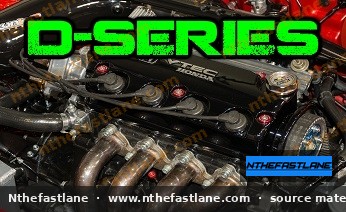
Engine Identification
Identifying a specific D-series engine is crucial for maintenance, parts ordering, and performance modifications. The engine code, which indicates the engine series and specific variant, is typically stamped on the engine block.
Locating the Engine Code
The engine code is usually found on a flat, machined surface on the front of the engine block, near the transmission bell housing or below the cylinder head. It will follow a format such as D16A6 or D17A2.
Tip
Clean the area thoroughly with a wire brush and degreaser if the stamp is obscured by dirt or oil buildup. A flashlight can also help in reading the code.
D-Series Engine Families
The D-series encompasses several displacement variants, most commonly 1.5L (D15), 1.6L (D16), and 1.7L (D17). Each family includes various sub-variants, some featuring Honda's VTEC (Variable Valve Timing and Lift Electronic Control) technology.
D15 Series
These 1.5-liter engines were prevalent in many entry-level Civic models. They typically feature a SOHC (Single Overhead Camshaft) design and can be found in both non-VTEC and VTEC-E (economy-focused VTEC) configurations. Common variants include the D15B, D15B7, and D15Z1.
D16 Series
The 1.6-liter D16 engines are perhaps the most diverse and popular D-series variants, offering a balance of performance and efficiency. They are available in non-VTEC, SOHC VTEC, and VTEC-E forms. Notable examples include the D16A6, D16Z6, D16Y8, and D16Y7.
D17 Series
The 1.7-liter D17 engines were introduced in the seventh-generation Civic (2001-2005). These engines exclusively feature SOHC VTEC technology, though some variants are designed for economy (VTEC-E) while others offer a more performance-oriented VTEC profile. Common variants include the D17A1 (non-VTEC in some markets, or VTEC-E) and D17A2 (VTEC).
General Specifications
While specific figures vary significantly between individual D-series engine codes and market applications, some general characteristics apply across the family.
- Cylinder Head: Primarily SOHC (Single Overhead Camshaft) design.
- Block Material: Aluminum alloy.
- Cylinder Head Material: Aluminum alloy.
- Valvetrain: 4 valves per cylinder.
- Fuel System: Multi-point fuel injection (MPFI) is standard on most later models.
Important
For precise specifications such as bore, stroke, compression ratio, power output, and torque values for a specific D-series engine, always consult the official Honda factory service manual (FSM) corresponding to your vehicle's year and model. These figures vary widely even within the same engine family.
VTEC Technology in D-Series Engines
Many D-series engines incorporate Honda's VTEC system, which optimizes valve lift and duration for improved performance or fuel economy. There are generally two types of VTEC found in D-series engines:
- SOHC VTEC: Utilizes a single camshaft with different cam profiles for intake valves (and sometimes exhaust valves) to enhance power at higher RPMs.
- VTEC-E: Designed for fuel efficiency, it uses a lean-burn mode at low RPMs by effectively deactivating one intake valve, then engaging both for higher RPM performance.
Identifying VTEC Engines
VTEC-equipped D-series engines typically have a solenoid valve mounted on the cylinder head, usually on the exhaust side, which controls the VTEC oil pressure. Non-VTEC engines will lack this external solenoid.
Maintenance Considerations
Proper maintenance is essential for the longevity and performance of any D-series engine. Key maintenance items include:
- Timing Belt Replacement: D-series engines are interference engines, meaning valve-to-piston contact will occur if the timing belt breaks. Adhere strictly to the factory-recommended replacement intervals, typically every 60,000 to 90,000 miles or every 7 years, whichever comes first.
- Valve Lash Adjustment: Many D-series engines require periodic valve lash adjustment to maintain optimal performance and prevent excessive valvetrain wear. Consult the FSM for specific clearance values and adjustment procedures.
- Oil Changes: Regular oil changes with the recommended viscosity and API rating are critical.
- Coolant System: Maintain the cooling system with Honda-approved coolant to prevent overheating and corrosion.
Caution
Always refer to the factory service manual for exact maintenance schedules, fluid specifications, and torque values. Using incorrect parts or procedures can lead to engine damage.
Applies to
2 taxonomy linksCredits and source
Source Adapted from Honda D-series Engine Specs Information on Nthefastlane. Licensed under All rights reserved.