Honda G-Series Engine Specifications and Identification
Explore the unique Honda G-series inline-five engines, including the G20 and G25, found in models like the Accord and Vigor. This guide covers key specifications and identification methods for these S
Adapted from Nthefastlane

The Honda G-series engine family represents a unique departure from Honda's more common inline-four and V6 designs, featuring an inline-five cylinder configuration. Primarily found in the Acura Vigor and certain Honda Accord models, these engines are known for their smooth operation and distinct sound profile.
Image placeholder - replace with a publication-cleared photo (d7f001_87f7046be57a41db804092e37544339e~mv2.jpg).
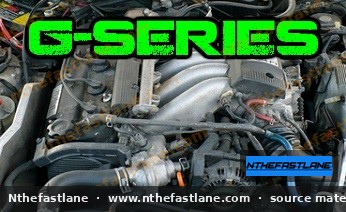
G-Series Engine Overview
The G-series engines were developed to offer a balance of power and refinement, positioning them between the four-cylinder and six-cylinder offerings of their time.
Key Characteristics
- Inline-Five Cylinder Design: A distinctive layout for Honda, providing inherent balance and smooth power delivery.
- Single Overhead Camshaft (SOHC): All G-series engines utilize a SOHC valvetrain.
- Non-VTEC: These engines do not incorporate Honda's VTEC variable valve timing system.
- Transverse Mounting: Designed for front-wheel-drive applications, mounted transversely in the engine bay.
Available Displacements
The G-series family includes two primary displacements:
- G20: A 2.0-liter variant.
- G25: A 2.5-liter variant.
Engine Identification
Identifying a specific G-series engine involves locating the engine code stamped on the engine block.
Locating the Engine Code
The engine code is typically stamped on a flat, machined surface of the engine block, usually near the transmission bellhousing or below the cylinder head on the front side of the engine. This code will specify the engine family (e.g., "G25A") and often includes a serial number.
Tip
Cleaning the area with a degreaser and a wire brush may be necessary to clearly read the stamped engine code, especially on older engines.
General Specifications
While specific figures can vary by model year and regional market, the following outlines general specifications for the G-series engines. Always consult the factory service manual (FSM) for precise values applicable to your specific vehicle.
G20 Engine
- Displacement: Approximately 2.0 liters (e.g., 1996 cc).
- Bore & Stroke: Specific dimensions must be confirmed against the factory service manual.
- Compression Ratio: Refer to the factory service manual for the exact compression ratio.
- Fuel System: Multi-point fuel injection.
G25 Engine
- Displacement: Approximately 2.5 liters (e.g., 2451 cc).
- Bore & Stroke: Specific dimensions must be confirmed against the factory service manual.
- Compression Ratio: Refer to the factory service manual for the exact compression ratio.
- Fuel System: Multi-point fuel injection.
Fluid Capacities and Types
- Engine Oil Capacity: Consult the factory service manual for the precise oil capacity, including filter change.
- Recommended Engine Oil: Refer to the factory service manual for the recommended oil viscosity and API service classification.
- Coolant Capacity: Confirm coolant capacity and type (e.g., Honda Type 2) with the factory service manual.
Spark Plug Specifications
- Recommended Spark Plugs: Use only spark plugs specified in the factory service manual or by Honda.
- Spark Plug Gap: The correct gap setting must be confirmed against the factory service manual.
Maintenance Considerations
Proper maintenance is crucial for the longevity and performance of any G-series engine.
Important
All maintenance procedures, torque specifications, and fluid requirements must be confirmed against the official Honda/Acura factory service manual for your specific vehicle year and model.
Timing Belt Service
The G-series engines utilize a timing belt that requires periodic replacement. Failure to replace the timing belt at the manufacturer's recommended interval can lead to catastrophic engine damage.
- Service Interval: Consult the factory service manual for the recommended timing belt replacement interval (typically mileage or time-based).
- Components: It is generally recommended to replace the timing belt, tensioner, and water pump simultaneously during this service.
Valve Adjustment
As SOHC engines, the G-series typically requires periodic valve lash adjustment to maintain optimal performance and prevent excessive valvetrain wear.
- Adjustment Interval: Refer to the factory service manual for the recommended inspection and adjustment intervals.
- Procedure: Follow the factory service manual's specific procedure for checking and adjusting valve clearances.
Fluid Specifications
Adhering to the factory-recommended fluid types and change intervals for engine oil, coolant, and transmission fluid is essential for reliable operation.
Applies to
2 taxonomy linksCredits and source
Source Adapted from Honda G-series Engine Specs Information on Nthefastlane. Licensed under All rights reserved.