COMPETITION

blundar

#1 โ—ˆ 2025-08-04

That's right, and there is a prize too.

Challenge:

Demonstrate a combination of electrical components easily available through major electronics retailers (Radio Shack, Digikey, Arrow, All American, etc.) that when connected to the IACV (Idle Air Control Valve) on an OBD1 ECU fools the ECU into thinking a IACV is actually present. Cheaper = better.

Chris Donahue measured the IACV as being a relatively large inductor with a 58mH inducance and ~15ohm DCR.


The reason this has become a contest is that the lack of a demonstrated proven solution is slowing down a project that will help many of the developers here.

First person to demonstrate a working solution gets $20 OR a Engine Sim v2.0 PCB that will incorporate the design they submitted.

If an additional solution is submitted that is significantly cheaper, smaller and more elegant, a second $20/PCB price may be awarded at my discretion.

Submit all entries via email to admin@pgmfi.org

[%sig%]

blundar

#2 โ—ˆ 2025-08-04

Re: COMPETITION

more help:

dave: have you happened to find the IACV check portion of the code?
dave: might be easier to figure out what to put in place knowing what is being lookd for
doc: ya, a long time ago - in a obd1 rom you can fix it with altering 1 BIT :-)
dave: wow!
dave: explain!
doc: it's allready posted in the forum - here's the code sniplet
doc: 3C52- ED 17 1B : JBS off 17.5, 3C70
3C55- ED 13 18 : JBS off 13.5, 3C70 ; jmp if IAC error
3C58- F5 C3 : LB A, C3
3C5A- 60 24 6B : MOV X1, #6B24
3C5D- 13 : VCAL 3
3C5E- C7 5A : CMPB A, off 5A
3C60- CA 0E : JLT 3C70
3C62- F5 C3 : LB A, C3
3C64- 60 2A 6B : MOV X1, #6B2A
3C67- 13 : VCAL 3
3C68- C7 5A : CMPB A, off 5A
3C6A- CD 04 : JGE 3C70
3C6C- F4 BD : LB A, off BD
3C6E- C9 01 : JEQ 3C71 ; change to JEQ 3c70 to avoid IAC Error
3C70- 95 : RC
3C71- C5 99 3B : MB 99.3, C ; set Error #14 IAC

[%sig%]

Darksmiles

#3 โ—ˆ 2025-08-04

Re: COMPETITION

I assume that everyone already knows that the IACV is just a solenoid but I thought I'd post up a scan of it from my factory manual for everyone to see.
It's a big jpg (1.4 meg) but it has high quality which is nice...
http://www.honda-hackers.com/ClubSi/IACV.jpg


So in reality, all the IACV does is move the pintle in or out based on voltage sent to it by the ECU. I can't remeber which way it goes though...if it's fully open at 12v or fully closed...

To fake it I woudl assume you simply need to know the inductance and resistance of the coil and thus you can calculate the resistance the ecu would see @ X voltage. At the same time, you may be able to fake it with a resistor and diode that runs to ground...you can fake out the Vtec solenoid like that...

-Hope that helps,
Andrew

[%sig%]

Post Edited (09-09-03 13:00)

blundar

#4 โ—ˆ 2025-08-04

Re: COMPETITION

that's not a competition entry - get to work Andrew :)

[%sig%]

marklamond

#5 โ—ˆ 2025-08-04

Re: COMPETITION

Mmmm this isn't easy, the ecu very picky about what it sees, and i can't relate it to anything at the moment.

I have it working with some obscure inductor i pulled from the parts bin, dunno what the hell it came from, some radio gear probably.

Perhaps i unwind it and count the turns, measure gauge of wire and build one on a new former if it comes to that (recall fond days of winding chokes for radio projects).

We continue......

blundar

#6 โ—ˆ 2025-08-04

Re: COMPETITION

the "easily available through major electronics retailers" clause will get you I think :)

[%sig%]

marklamond

#7 โ—ˆ 2025-08-04

Re: COMPETITION

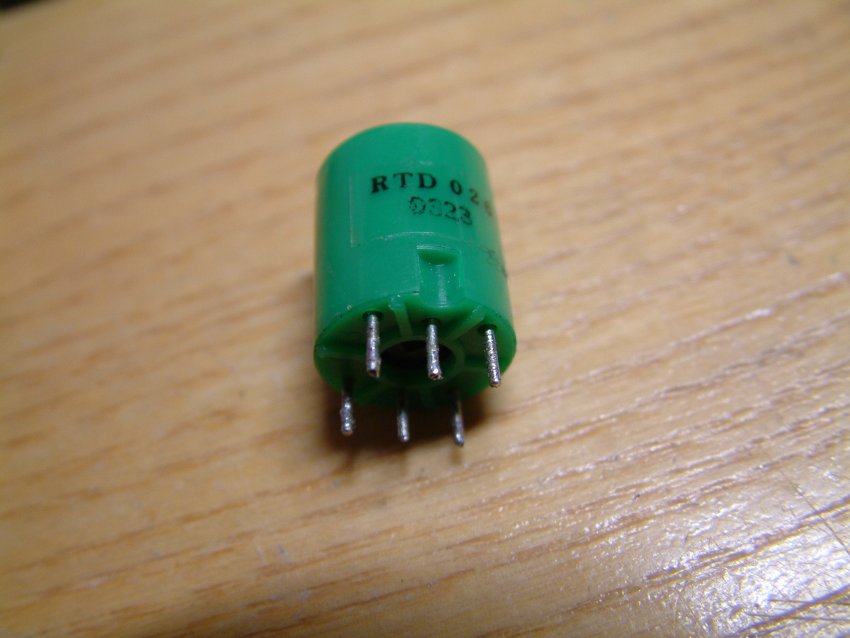
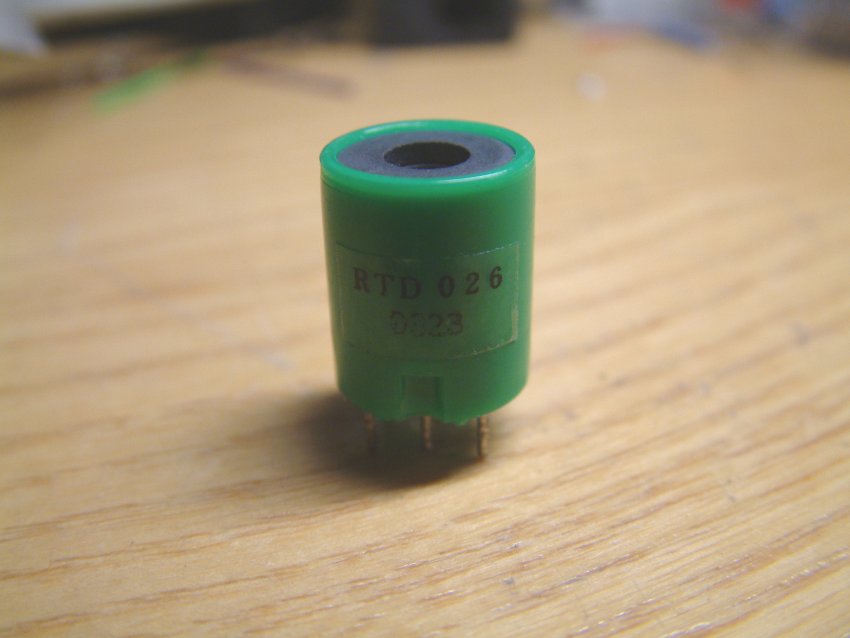
Ok so all we need now is a supplier of this funky green thing!

Image
Image

Ok so this is a bit pointless but a step in the right direction, i will play around some more tomorrow night. Had the ECU running for about an hour and it didn't pop a code.

Speedz

#8 โ—ˆ 2025-08-04

Re: COMPETITION

hmm.. might be a good thing for ITB's... been trying to figure out what they do with all the other stuff that's on an Intake manifold.

[%sig%]

blundar

#9 โ—ˆ 2025-08-04

Re: COMPETITION

speedz - the code snippet above gives how to disable the IAB check. If you're running ITBs, that's the way to go.

This is for other reasons...

[%sig%]

alphajesse

#10 โ—ˆ 2025-08-04

Re: COMPETITION

Blundar, you mean IACV, right?

Darksmiles

#11 โ—ˆ 2025-08-04

Re: COMPETITION

blundar wrote:

> that's not a competition entry - get to work Andrew :)
>

Dang! But it's so hard to get at my stupid IACV plug..... stupid b18c1 manifold!!

;)

[%sig%]

turbo sol

#12 โ—ˆ 2025-08-04

Re: COMPETITION

hi,

I'm a Noob at this hond stuff... But from what I can tell... the system is a servo of sorts. The input would be the ECU changing the voltage to the IACV... but then the output would be the engine speed going up or down. (like a servo knowing it's own position) If the ECU takes the control solenoid voltage up to max, but doesn't see a change in the RPM... it would think that the IACV is bad. (and throw a CEL)

I could be WAY off on this on (because I don't know Honda very well yet) But that would be the logical operaton of the system.

Now, if you fool the ECU in to thinking the speed is going up and down when it isn't (which can be done) It would throw off the timing and fuel. (Unless there is a seperate crank sensor and tach pulse)

I don't know... maybe you guys are talking about somthing all together different. But I thought I would just throw that out.

GimpyAccord

#13 โ—ˆ 2025-08-04

Re: COMPETITION

unless im mistaken the ECU isnt doing any kind of sanity check on the IAC right?? BESIDES continuity that is. I mean it sends the pulse and assumes the IACV reacted, right? If thats the case this seems somewhat straightforward, we just need to find the parts.

blundar

#14 โ—ˆ 2025-08-04

Re: COMPETITION

The ECU does some sort of sanity check. The sanity check is NOT done for a reaction the to IACV - in many cases, the IACV is used to stabilize RPM as opposed to change it.

The IACV is a simple solenoid. It behaves like an inductor. The ECU performs some check (referenced in the above code, but not explained enough that I can understand electrically what it is looking for) that I've been told is neither voltage (voltage across IACV different w/ Green thing and stock IACV) nor resistance (again, different between greeny and stock) so wtf?

[%sig%]

marklamond

#15 โ—ˆ 2025-08-04

Re: COMPETITION

The signal to the IACV is a pulse train, the ecu alters the width of these pulses - PWM to control the IACV current. The voltage applied to the IACV is always the same, just because your multimeter sees a changing voltage relating to valve lift does not mean to say that it's telling you the truth! A multimeter is useless for this sort of thing.

You can't drive solenoids like this with a constant voltage - try applying a continual voltage supply with enough current to operate the IACV and what happens - you will heat or smoke the IACV as it will drag loads of current. You will have to pass a lot of current to get it to shift, yet require little to hold it's position. The only way is PWM. Remember inductors have unique properties, to straight DC it appears as an 11ohm near short but to AC or a pulse train everything changes....

Yeah i'd agree that the ECU alters the pulse width to the and expects it to react and hope all goes well (and not look for the MAP to change etc) but this appears to be far more involved than on the surface. And another thing, when it's quiet turn on your ign only and pop the bonnet (hood) and listen to the inlet manifold - what do you hear - the IACV humming away due to the pulses it's being fed.

This funky green inductor i'm using has an adjustable core, if i alter it i can actually force an IACV error (and draw some conclusions as to why), so i assume the inductor is acting as part of a tuned circuit. The ecu needs very little change to make it CEL.

Wheeling the scope out reveals many clues, and i think i know what the ECU is looking for to validate the input but i need to do some more work.

[%sig%]

Post Edited (09-10-03 16:10)